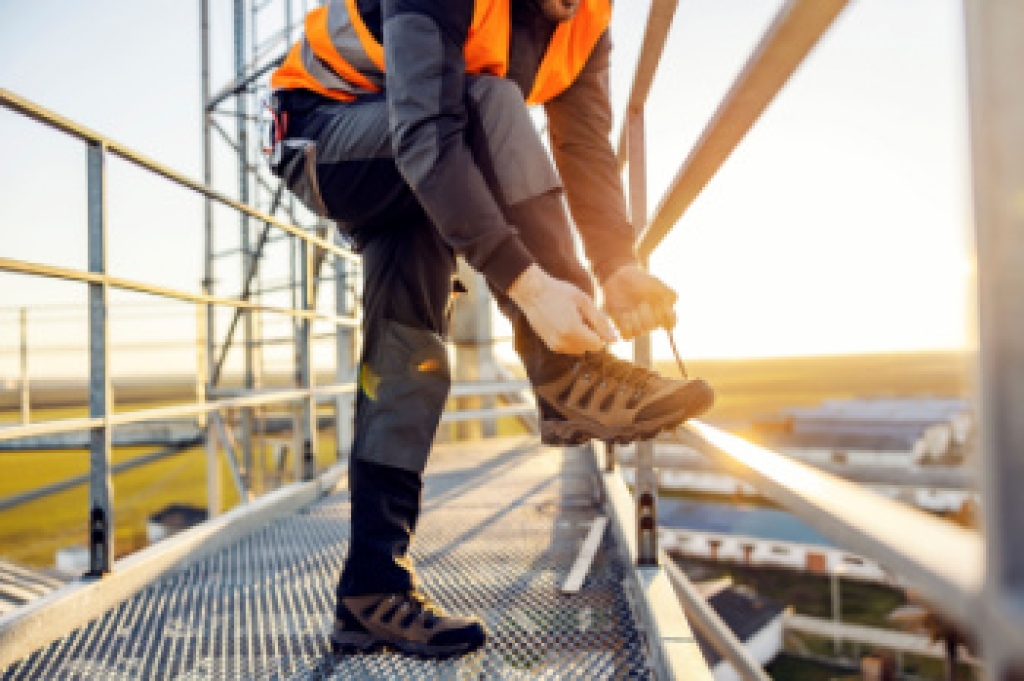
Construction workers face daily foot hazards that make proper work shoes essential for safety and comfort. Heavy materials can fall, sharp objects may pierce soles, and uneven surfaces increase the risk of slips and ankle injuries. Wearing construction footwear that fits poorly or lacks suitable protection leads to foot pain, bruising, and more serious injuries. Workers who stand or walk for long hours may also experience swelling and soreness. Risk factors include working around exposed nails, handling heavy equipment, and moving across wet or uneven ground. Choosing safety footwear based on workplace hazards helps protect the feet while supporting comfort throughout a demanding shift.
When selecting construction work boots, look for protective toe caps, puncture-resistant midsoles, and slip-resistant outsoles. Steel-toe, alloy-toe, or composite-toe footwear can help protect against falling objects and compression injuries when it meets the required safety standard. Puncture-resistant soles reduce the chance of sharp debris penetrating the bottom of the shoe. Slip-resistant tread improves traction on damp or dusty surfaces, although no sole prevents every fall. Boots should also provide secure heel support, adequate arch support, and enough room for the toes to move without rubbing. Choose breathable materials when appropriate, and make sure the footwear fits comfortably with your usual work socks. Replace damaged boots when protective features become worn or compromised.
Construction workers may encounter footwear labeled S1, S2, or S3, classifications used under certain safety footwear standards. S1 footwear generally includes a protective toe cap, antistatic properties, energy absorption at the heel, and a closed heel area. S2 footwear includes S1 features plus water penetration and absorption resistance in the upper material. S3 footwear adds a penetration-resistant midsole and a cleated outsole under the relevant standard. These classifications do not automatically guarantee that every boot suits every construction site. Requirements vary by job hazards and local regulations, so check the applicable standard and product specifications.
Even with suitable construction boots, foot problems can develop when shoes are worn out or incorrectly sized. Warning signs include persistent soreness, pressure marks, or repeated blisters. A podiatrist examines your feet, identifies pressure points, and assesses any injury affecting your walking. Depending on the findings, treatment may include wound care, recommendations for properly fitted safety footwear, or custom orthotics to improve pressure distribution. Workers with diabetes should seek prompt care for foot injuries because healing can be slower. If foot pain develops from wearing unsuitable shoes while working in construction, it is suggested that you consult a podiatrist for an accurate diagnosis and appropriate treatment.
While working on the feet, it is important to take the proper care of them. For more information about working on your feet, contact Elie C. Daniel, DPM from Illinois. Our doctor will treat your foot and ankle needs.
Working on Your Feet
Standing on your feet for long periods of time can cause stress and pain in your feet. Your whole body may experience change in terms of posture, back pain, bunions, callouses and or plantar warts. There are ways to avoid these conditions with proper foot care, smart choices and correct posture.
Positive Changes
Negative heeled shoe – Choosing this shoe type places the heel slightly lower than the ball of the foot. These are great for overall foot health. Find shoes that fit you correctly.
Go barefoot – Our feet were not designed to be enclosed for all hours of the day. Try to periodically expose your feet to air.
Eliminate Pain
Foot Exercises – Performing simple exercises, incorporating yoga and doing stretches are beneficial. This will allow increased blood flow to the area and muscles of the foot.
Achilles tendon – Stretching the foot out flat on the floor will relax the calf muscles and tendon. These exercises can be performed almost anywhere. Make sure you add these exercises to your daily regimen.
With a little bit of this information and knowing more about foot health, you will notice changes. Foot stretches and proper footwear will help with pain and prevent further issues.
If you have any questions please contact our offices located in Princeton, Peru, and Mendota, IL . We offer the newest diagnostic and treatment technologies for all your foot and ankle needs.
